What does it take for a child with visual impairment to truly experience science?
For sighted students, science is taught through diagrams, charts, and demonstrations. But for a child who cannot rely on sight, learning must be accessible, inclusive, and experiential – using sound, touch, and movement to bring concepts to life.
At the Light House for the Blind school in Malda, the institution has always been deeply committed to its students. Yet, opportunities to explore subjects like science and mathematics were limited.
Bridging systemic gaps through inclusive STEM education
Since 2023, Cognizant Foundation, in collaboration with Vision Empower, has introduced a hands-on STEM learning initiative across 10 special schools in West Bengal.
Subhastryan’s Journey – Before: Learning without access
Class X student at the LightHouse For The Blind, Kolkata, Subhastryan Mardi comes from a farming family in Kalna, Malda, West Bengal.
Born with low vision, he found himself navigating between the worlds of blindness and sight. Reading print was tough, and learning Braille brought its own challenges, making daily studies increasingly difficult and affecting his confidence.
Over time, he grew hesitant to participate in classroom discussions or speak in front of others.
Turning point: A new way of learning
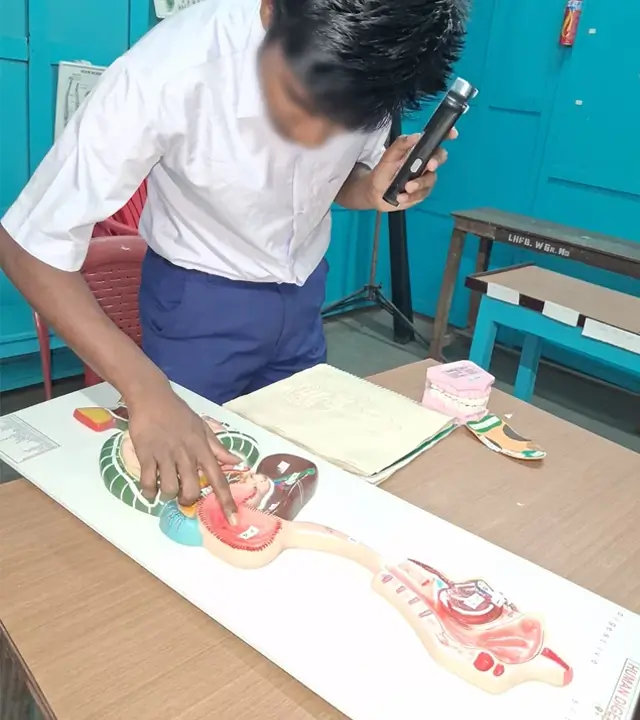
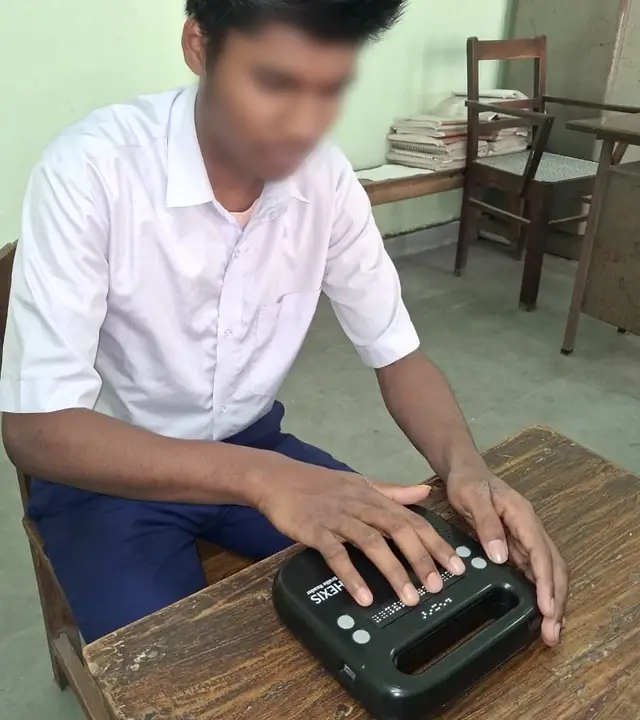
His journey took a new turn when his school became part of the STEM initiative supported by Vision Empower and Cognizant Foundation. With the introduction of inclusive STEM learning initiative,
- Accessible STEM labs were introduced to create hands-on and experiential learning environments for students with visual impairment.
- Teachers were trained in inclusive STEM practices
- Students explored digital literacy and computational thinking
- Assistive technologies like Hexis Braille Reader and IRIS tactile audio device enabled independent learning. Hexis helped him practise Braille more independently and comfortably, while IRIS enabled him to explore science through accessible and hands-on experiments.
STEM learning gradually became more interactive, engaging, and approachable.
Gradually, even Braille became easier.
After: From hesitation to participation
What made a real difference was the way Subhastryan embraced the technology with curiosity, interest, and a strong willingness to learn. With continuous support and regular practice, the student who once struggled quietly slowly began stepping forward with confidence.
A significant moment in his journey was attending Curious Minds 2025 in Bangalore, an inclusive science exhibition focused on making STEM learning accessible and experiential for children with visual impairment. The experience further strengthened both his curiosity and confidence in science.
Today, Subhastryan actively participates in science activities, quizzes, debates, and classroom discussions. He dreams of becoming a Physics teacher someday!
Subhastryan has a remarkable understanding of physics and is an extremely sincere and talented student. It is encouraging to see such enthusiasm for learning science at a young age, and I believe he has great potential to grow further in this field.”
– Science teacher, LightHouse For The Blind
For his family and teachers, this transformation has been remarkable. Subhastryan’s story is a reminder that when children have access to the right learning environment, accessible tools, and the support of their teachers and parents, they do not just learn better; they begin believing in their own potential.
Subhastryan’s story is a reminder that when children have access to the right learning environment, accessible tools, and the support of teachers and families, they do not just learn better—they begin believing in their own potential.