A two-day Pragya Teacher Training Program equipped educators with STEM, digital literacy, and assistive technology tools to make learning more inclusive, engaging, and accessible for students with visual impairment.
Teacher training for inclusive STEM education is transforming how educators support students with visual impairment. In Khordha, Vision Empower’s two-day Pragya Teacher Training Program equipped teachers with practical tools, assistive technologies, and hands-on methods to make learning more accessible and effective.
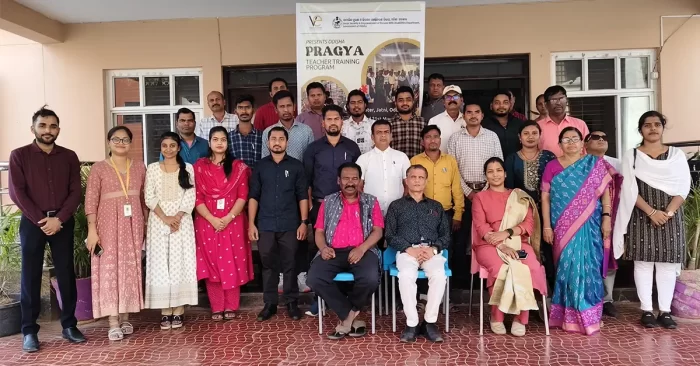
The Pragya Teacher Training Program was successfully conducted over two days on March 20 and 21 in Khordha. The workshop focused on strengthening teachers’ skills in STEM education, digital literacy, and computational thinking.
Teachers were also introduced to assistive technologies and tools such as Subodha audiobooks, enabling them to better support students with diverse learning needs.
Key Highlights from the Training Program
Participation and Special Guests
The program was attended by distinguished guests including Sannyashai Kumar Behera (Deputy Secretary, SSEPD), Dilip Kumar Hial (DSSO, Khordha), and Mrs. Supriya Tripathy (SSSO, Khordha). They interacted with teachers and presented certificates upon completion. Representatives from UNFPA also participated in the sessions.
Knowledge Sharing and Collaboration
Teachers who had recently undergone training in Bangalore shared their learnings on Nemeth Code with fellow educators, strengthening peer-to-peer knowledge exchange.
Hands-On Learning and Group Activities
An engaging group presentation session allowed teachers to demonstrate computational thinking games and lead interactive activities, encouraging collaborative learning through practice.
Impactful Feedback from Participants
Participants appreciated Vision Empower’s inclusive STEM program as highly impactful, with teachers appreciating the specialized training, continuous support, and play-based learning tools that make complex concepts accessible for students with visual impairment. Representatives from UNFPA and special education leaders also commended the hands-on approach, innovative tools like Hexis and IRIS, and the program’s strong classroom adoption—reinforcing its role in advancing accessible and engaging education.
Read the full feedback here – https://visionempowertrust.org/pragya-teacher-training-program-in-khordha-impactful-feedback-from-participants