Accessible STEM education can transform how children with visual impairment experience learning. Ankita Singh and Nainika P S come from different parts of India, separated by more than 2,000 kilometres, but their journeys share a powerful common connection.
Both are curious, talented, and eager to learn. For both of them, visual impairment was never the real problem.
The real problem was ACCESS.
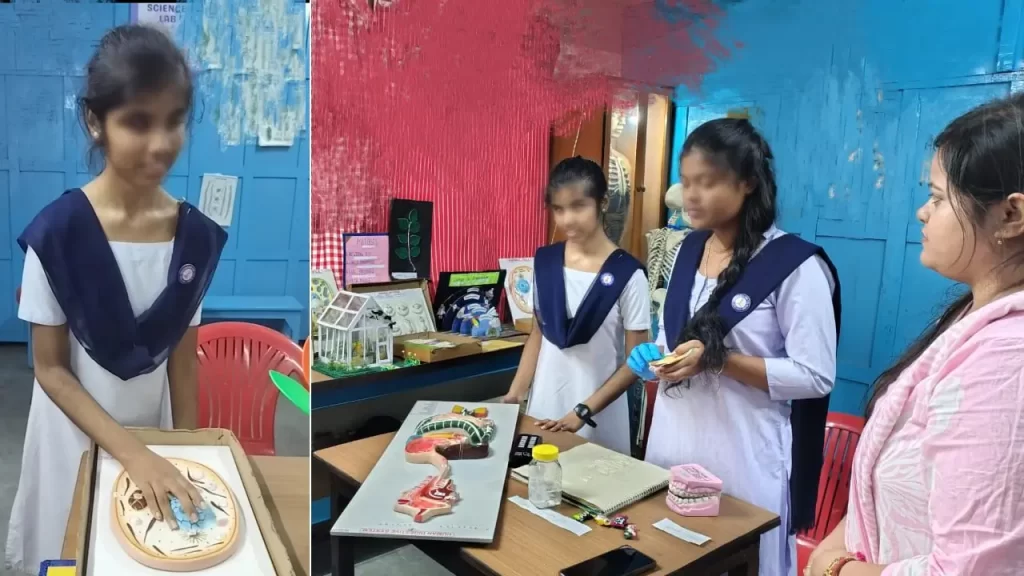
Ankita Singh, a Class IX student from Light House for the Blind in Kalighat, West Bengal, was always bright and capable. But for a long time, she hesitated to participate in classroom activities that did not feel meaningful or accessible to her.
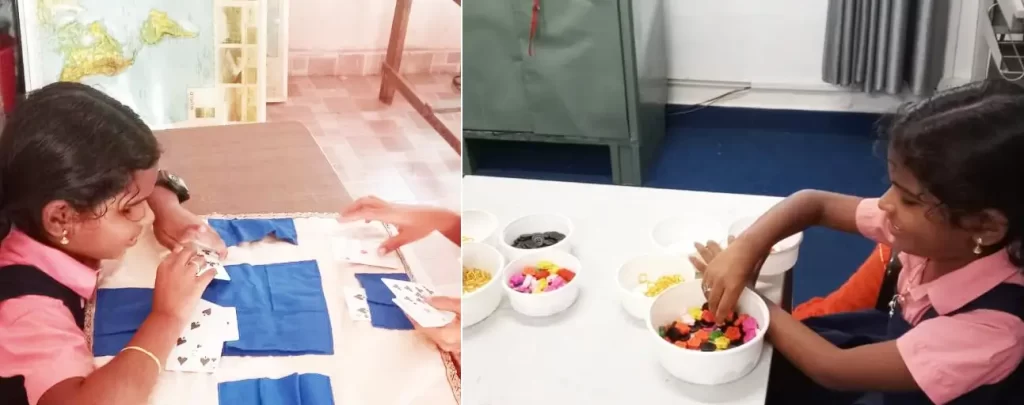
Far away in Kerala, Nainika P S, a Grade IV student at Government School for the Blind, Kunnamkulam, was an enthusiastic and joyful learner, especially good with hands-on work. But Mathematics and Science often felt distant because many abstract concepts were hard to experience without the right tools.
The turning point came when Cognizant Foundation and Vision Empower introduced an accessible STEM learning initiative in their schools. With STEM labs, tactile learning materials, Computational Thinking games, Digital Literacy sessions, assistive technology, and teacher training, learning became more hands-on, accessible, and meaningful.
The change was remarkable.
Ankita moved from being a quiet observer to an active participant. She began asking questions, joining discussions, and exploring science activities with greater confidence. She even demonstrated experiments at the inter-school science exhibition, Anubhave Bigyan.
For Nainika, learning became something she could explore and experience. Games such as Rummy, Pallanguzhi, and Sudoku helped her engage with logic and numbers, while tactile learning materials made complex Mathematics and Science concepts easier to understand.
Today, Ankita dreams of becoming a teacher, while Nainika dreams of becoming an IAS officer.
Their journeys changed not only how they experienced learning, but also how those around them understood visual impairment—not as a limit to potential, but as a reminder of the importance of creating the right access, tools, and support.
When children have access to the right learning environment, they do more than understand their lessons. They gain the confidence to participate, explore, and imagine new possibilities for their future.