Early childhood education for children with visual impairments
A well-planned lesson can succeed only when children feel calm, engaged and ready to participate. In early childhood education for children with visual impairments, thoughtful classroom management and inclusive teaching strategies can play an important role in creating meaningful learning experiences.
Vision Empower strengthened its Early Childhood Care and Education (ECCE) programme by building teachers’ capacity in practical classroom-management strategies and introducing MINDSHIFT, an initiative that integrates emotional well-being into everyday learning.
Building Positive and Engaging Classroom Routines
Teachers were introduced to simple, immediately usable techniques such as call-and-response, positive reinforcement, attention-grabbers and smooth transitions. These strategies helped them guide children efficiently, encourage positive behaviour and create more predictable and engaging classroom routines.
Integrating Emotional Well-Being into Everyday Learning
Alongside this, MINDSHIFT activities were woven into regular classroom learning rather than being treated as a separate subject. The initiative focuses on mindfulness, self-awareness, social connection, resilience and flexibility, helping children develop emotional and cognitive skills together.
As part of Vision Empower’s inclusive early childhood education programme, children with visual impairments participated in multisensory activities that strengthened positional understanding, sequencing, auditory discrimination and reasoning. They explored concepts such as left and right through movement, learned days of the week through routines, distinguished different sounds and took part in rhythm-based activities.
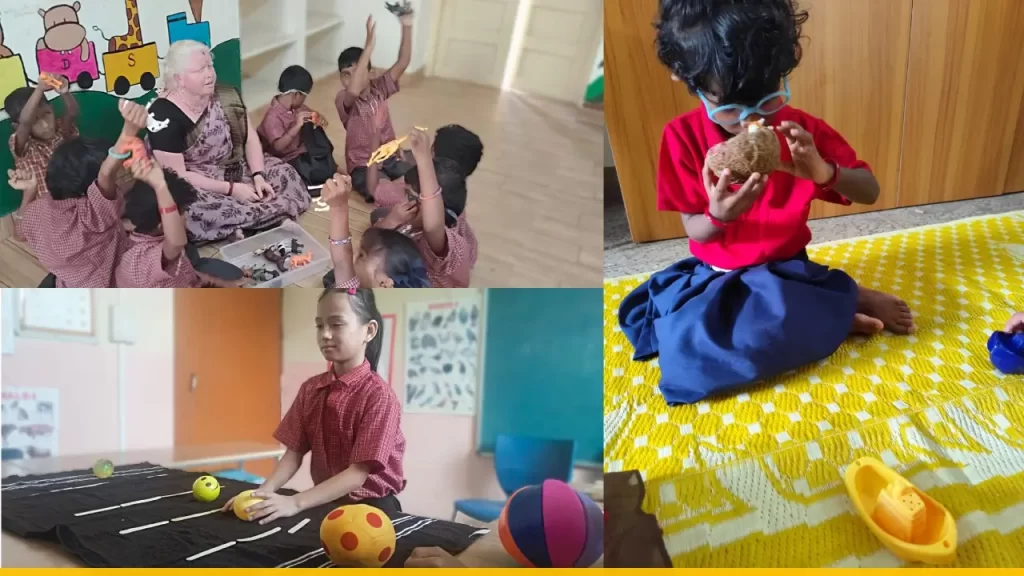
A key feature was the daily Choice and Reason routine. Before beginning the lesson, children chose a toy, movement, texture, smell or sound and explained why they preferred it. Through this simple practice, they learned to express their choices, reflect on their sensory experiences and communicate their reasoning.
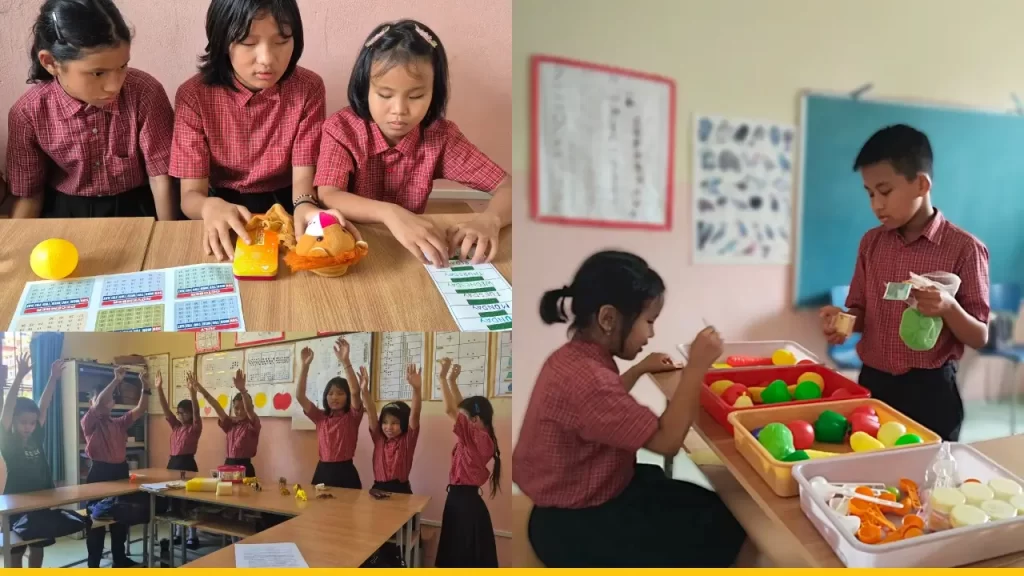
With regular practice, children began to recognise their own preferences and express themselves with greater confidence. These small choices became meaningful opportunities to strengthen self-awareness, decision-making and independence.
“I really enjoy these activities because they are fun and different every time. I get excited to see what new choices I can make and explore.”
– Student, VMA School, West Bengal.